You fill the bin, the truck comes, and the skip disappears down the road. Job done, right?
For most people, that is where the story ends. But have you ever wondered where all that waste actually goes? Does it all end up in a hole in the ground? Does any of it get recycled? And does it matter which skip bin company you use?
The answer to that last question is yes. It matters more than most people realise.
The First Stop: Transfer Station or Sorting Facility
When a skip bin gets picked up from your driveway or worksite, it does not go straight to a landfill. In most cases, the truck takes the bin to a transfer station or waste sorting facility.
In Western Sydney and the Macarthur region, there are several licensed facilities that receive skip bin waste. These sites act as the sorting hub where materials get separated before heading to their final destination.
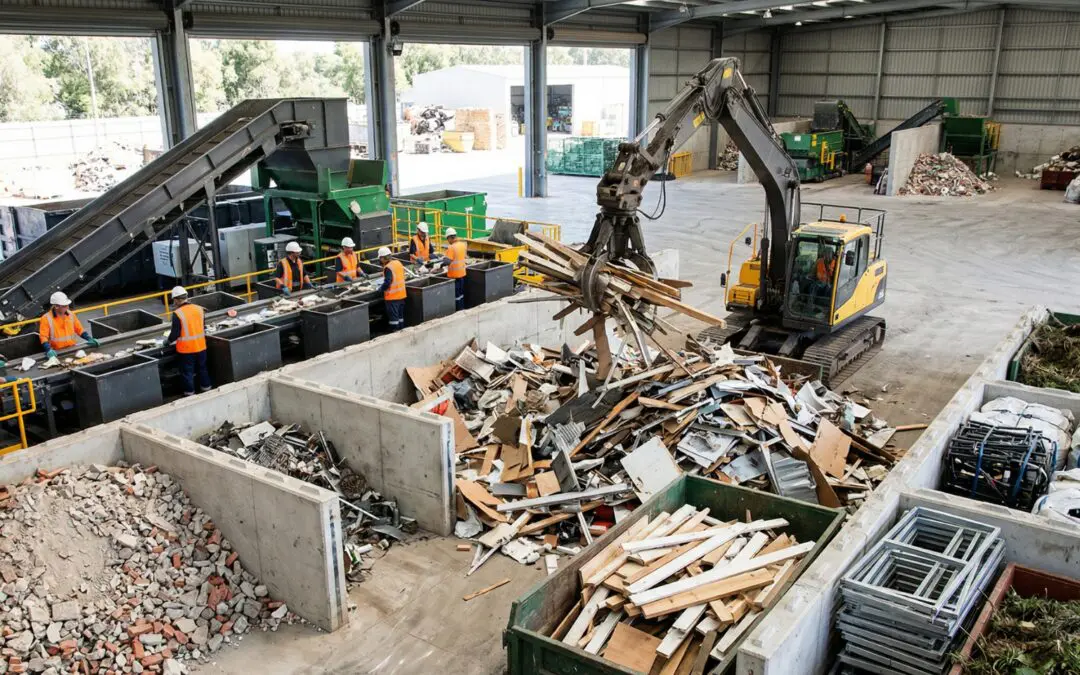
At the transfer station, the bin is tipped and the contents are spread out. Depending on the facility, this sorting happens by machine, by hand, or a combination of both. The goal is to pull out anything that can be recycled or reused before the remaining waste goes to landfill.
What gets sorted depends on what was in the bin. A load of pure concrete or masonry goes straight to a crushing facility. A mixed construction waste load needs more work because it contains timber, metal, plasterboard, plastic, and general rubbish all mixed together.
What Gets Recycled and What Gets Landfilled
The recycling rate for skip bin waste in Sydney varies widely depending on the operator and the waste type. Here is what typically happens to common materials:
Concrete, Bricks, and Masonry
These are the most recyclable materials in the skip bin stream. Concrete and bricks get crushed into aggregate, which is reused as road base, fill material, or drainage rock. In many cases, a bin loaded with clean masonry waste is cheaper to hire because the recycled product has commercial value.
This is why dedicated masonry bins exist. Keeping concrete, bricks, and tiles separate from general waste makes recycling straightforward and keeps costs down for both the operator and the customer.
Metal
Metal waste is valuable. Steel, aluminium, copper, and other metals are pulled from mixed loads using magnets and manual sorting. This material goes to scrap metal processors and gets melted down for reuse. Metal recycling has a high recovery rate because the economics make it worthwhile for every facility in the chain.
If you have a load that is mostly metal (old roofing, steel framing, guttering, fencing), separating it into its own bin can save you money and help the recycler process it faster.
Timber
Clean timber (untreated, unpainted) can be chipped and used for mulch, biomass fuel, or composting. Treated or painted timber is harder to recycle and often ends up in landfill because the chemical treatment makes it unsuitable for most reuse applications.
On a renovation job, timber framing, floorboards, and fence palings are common. If these are untreated, they have a good chance of being diverted from landfill. Painted timber, laminated products, and engineered wood are less likely to be recycled.
Plasterboard
Plasterboard (gyprock) is technically recyclable. The gypsum core can be recovered and reused in new plasterboard manufacturing or as a soil amendment. However, plasterboard recycling in NSW depends on whether the facility has the equipment to process it. Not all transfer stations handle plasterboard separately, and contaminated board (with paint, adhesive, or tile residue) is harder to process.
Green Waste and Soil
Garden waste, tree branches, and soil each follow their own path. Green waste goes to composting facilities. Clean soil (known as VENM or ENM in NSW) can be reused on other construction sites as fill. Contaminated soil requires testing and may need treatment before it can be reused or disposed of at a licensed facility.
General Household Waste
Here is where the recycling rate drops. A mixed load of general waste containing furniture, clothing, plastic bags, food packaging, broken appliances, and random household items is difficult to sort efficiently. The recoverable materials (metals, some plastics) get pulled out where possible, but a significant portion of mixed general waste ends up in landfill.
This is not unique to skip bins. It reflects the reality of mixed waste streams across the entire waste industry. The more mixed the load, the harder it is to recycle.
Why It Matters Which Skip Bin Company You Choose
Not all skip bin operators handle waste the same way. Some companies own or have partnerships with sorting facilities that prioritise recycling. Others use the cheapest disposal option available, which often means more waste going straight to landfill with minimal sorting.
The difference is not always visible to the customer. Two companies might charge similar prices for the same sized bin, but one diverts 60% or more of the waste from landfill while the other diverts far less.
If recycling matters to you (and for tradies working under increasingly strict council requirements, it should), ask your skip bin provider where the waste goes and what their diversion rate looks like. A company that has been in the industry for decades and operates locally is more likely to have established relationships with quality recycling facilities than a broker who subcontracts everything.
How You Can Help at the Loading Stage
What you put in the bin and how you load it has a direct impact on how much gets recycled. A few simple habits make a real difference:
Keep heavy waste separate. If you have concrete, bricks, or soil, put them in a dedicated bin rather than mixing them with general waste. This makes the recycling process easier and often costs you less.
Do not bag everything in plastic. Bagged waste has to be opened at the sorting facility, which slows down processing. Loose items are easier to sort and more likely to be recovered.
Remove prohibited items. Paint tins, gas bottles, batteries, chemicals, and asbestos must never go in a skip bin. These materials contaminate the entire load and can cause the whole bin to be classified as hazardous waste, which is far more expensive to dispose of.
Tell the operator what is in the bin. When you book, describe the waste type honestly. This helps the operator route the bin to the right facility and increases the chance of proper recycling.
The Bigger Picture
Australia sends millions of tonnes of waste to landfill every year. The construction and demolition sector is one of the largest contributors, but also one of the sectors with the highest recycling potential. Materials like concrete, steel, and timber are straightforward to recycle when they are properly sorted.
The skip bin you hire is a small part of a much larger system. But the choices you make (which company you use, how you load the bin, whether you separate heavy waste) all push the needle in the right direction.
You do not need to be an environmentalist to care about this. It is practical. Better sorting means lower disposal costs. Lower disposal costs mean better pricing for customers. And less waste in landfill means fewer tip fees for everyone in the long run.
Want to Know More About Where Your Waste Goes?
If you are curious about how we handle specific waste types, or you want advice on the best way to sort your load before the bin arrives, reach out to our team. We are happy to walk you through the process.