One of the most common questions people forget to ask when hiring a skip bin is how long they actually get to keep it. They focus on the size, the price, and the delivery date, but the rental period gets overlooked until the invoice arrives with an extension fee.
Understanding how hire periods work helps you plan your project properly and avoid paying for time you did not need, or getting caught out when the job runs longer than expected.
What Is a Standard Skip Bin Hire Period?
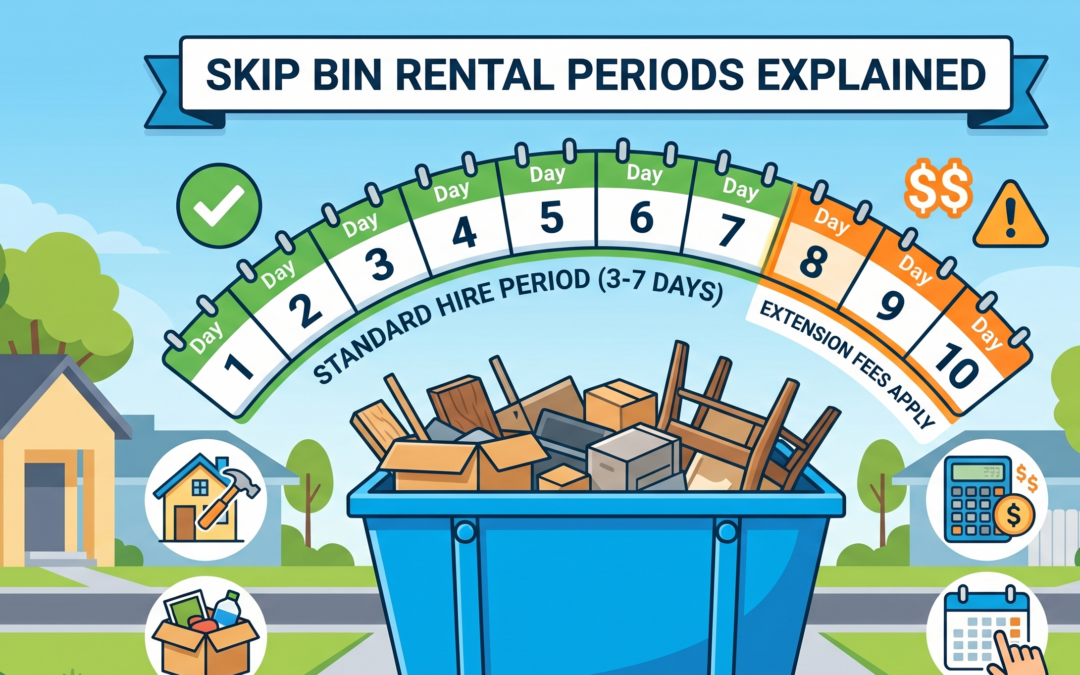
Most skip bin companies in Sydney include a set number of days in the base hire price. This is your standard rental period, and it starts from the day the bin is delivered to the day it gets picked up.
The industry standard in Sydney is typically between 3 and 7 days, depending on the company. Some operators offer a 3 day window as the base, with daily fees for anything beyond that. Others include a full 7 days in the standard price.
There is no universal rule. Each operator sets their own terms, which is why it pays to ask before you book rather than assuming you have a week.
How the Rental Period Works in Practice
The clock starts when the bin lands on your driveway or worksite. From that moment, you have the included number of days to fill it and request pickup.
Most companies expect you to call when you are ready for collection rather than automatically picking up on the last day. This works in your favour if you fill the bin early. Call on day two and the bin gets collected on day two or three. You do not have to wait until the rental window expires.
If you need the bin longer than the standard period, you can usually extend the hire. Extension fees are charged per day and vary by company. Some charge a flat daily rate (often between $15 and $40 per day), while others have a tiered structure where the daily rate increases the longer you keep the bin.
What Affects How Long You Need the Bin?
The right rental period depends on the type of project you are doing and how fast you can generate waste.
A weekend cleanout (garage, shed, general household declutter) usually takes 1 to 2 days. A 3 day rental gives you enough time to fill the bin at your own pace, even if you do not start until Saturday afternoon.
A bathroom or kitchen renovation typically produces waste over 3 to 5 days. The demolition happens quickly (often in a single day), but there is usually a second wave of waste as old fittings, tiles, and packaging from new materials pile up through the week.
A full house renovation or large construction project can stretch over weeks. For these jobs, a single long rental may not be the best approach. It is often more practical (and cheaper) to have the bin swapped when it fills up rather than keeping a single bin on site for the entire project. This way you only pay for the bin when it is actively being used.
A deceased estate cleanout can take anywhere from a weekend to a fortnight, depending on the size of the property and how much sorting is involved. If you are going through a loved one’s belongings and deciding what to keep, donate, or discard, give yourself extra time. Rushing this process is rarely a good idea.
A tradie running multiple jobs may need a bin on site for just one or two days at each location. Short hire periods work well here, especially when paired with a trade account that allows for quick rebooking without renegotiating terms every time.
What Happens If You Go Over the Hire Period?
Going beyond the standard rental period is not unusual and it is not a disaster. But it does cost extra, and the fees vary between operators.
When your hire period expires, most companies will contact you to confirm whether you need the bin collected or whether you want to extend. If you do not respond, daily fees will usually accrue automatically until the bin is picked up.
The extension fee is typically a flat daily rate. On a small bin, this might be $15 to $25 per day. On a larger bin, it could be $30 to $50 per day. These fees add up quickly if you are not paying attention.
Some operators cap extensions at a certain number of days before requiring a new booking. Others are flexible as long as you communicate.
The key takeaway: if you know your project will run longer than the standard period, tell the operator when you book. Many companies will negotiate a longer hire period upfront at a better rate than the day-by-day extension price.
Short Hire vs Long Hire: Which Is Better Value?
For most one-off projects (a cleanout, a single renovation, a landscaping job), the standard 3 to 7 day hire period is fine. You generate the waste, fill the bin, and call for pickup. Simple.
For longer projects, you have two options:
Option 1: Extended single hire. Keep the same bin for the full duration of your project. You pay the base price plus daily extension fees for every day beyond the standard period. This works if the waste is produced steadily and you want the bin on site the whole time.
Option 2: Multiple short hires with swaps. Have the full bin collected and a fresh bin delivered as needed. You pay per bin, but you are not paying daily extension fees for a bin sitting half-empty on site while you wait for the next phase of the project to generate waste.
For a 10m or 12m skip bin on a construction site that runs for several weeks, swaps are almost always more cost effective. For a 4m bin on a bathroom reno that takes five days, a single hire with a short extension is simpler and cheaper.
Tips for Getting the Most Out of Your Hire Period
Start loading as soon as the bin arrives. If the bin is delivered on Monday, do not wait until Thursday to start filling it. Use the time you have paid for.
Have everything ready to go before delivery. If you are doing a cleanout, sort your items before the bin shows up. Pile what is going in the bin in one area so loading is fast and efficient.
Call for pickup when you are done, not when the hire period ends. If you fill the bin on day two of a seven day hire, call straight away. There is no benefit to having a full bin sit in your driveway for five extra days.
Communicate with the operator. If your project is running behind schedule, call and discuss extending before the hire period expires. Proactive communication almost always gets you a better deal than a surprise extension charge on your invoice.
The Bottom Line
Skip bin hire periods are flexible, but they are not free. Understanding how they work before you book lets you choose the right option for your project, avoid unnecessary extension fees, and plan your timeline properly.
If you are not sure how long you will need the bin, just ask. We can recommend the right hire period based on your project type and timeline. Get in touch here and we will sort it out.